How Corporate Meditation Classes Improve Focus and Company Culture
The workday moves faster than ever. Emails stack up, meetings never seem to end, and interest slips away before lunch.
Yet in all that noise, one quiet practice is transforming workplaces, corporate meditation classes.
They don’t just help people breathe better. They change how teams think, react, and connect. A short moment of stillness, shared across a busy office, can shape how a company feels from the inside out.
The Pressure Behind Every Desk
Modern work appears polished on the surface. But under that surface, stress builds up quietly.
Every project deadline, every client call, and every late-night email provides another layer of stress. Over time, focus fades, patience shrinks, and the office energy feels heavy.
That’s the point where mindfulness steps in, no longer as a luxury, however, but as a reset.
Corporate meditation classes deliver employees space to breathe again and find balance between effort and ease.
A few deep breaths can shift an entire meeting’s tone. The pause between tasks will become a moment of clarity rather than exhaustion.

What Meditation Really Does
Meditation isn’t about sitting perfectly, nevertheless, or silencing the mind.
It’s about recognition—noticing what’s taking place in the mind and body without judgment.
In a place of job setting, this awareness brings sharper focus and less reactivity.
When stress rises, employees learn how to respond instead of react.
That simple shift can prevent repeated misunderstandings, conflicts, and burnout cycles.
Regular meditation classes train focus in the same manner as physical exercise trains the body. The more frequently it’s practiced, the stronger focus becomes.
People stop multitasking and start engaging. They pay attention better, think deeper, and make choices more evenly.
Focus Starts with Stillness
Every company wants employees who concentrate deeply. But actual awareness doesn’t come from pushing harder, it comes from learning how to pause.
Meditation builds this ability steadily.
Neuroscience suggests that mindfulness strengthens the mind’s prefrontal cortex, the region responsible for readability, common experience, and emotional balance.
That technique leads to fewer distractions, faster trouble-solving, and further confident desire-making.
During a busy day, even 5 minutes of guided respiration can reset recognition. Over time, the small resets reshape how humans think, plan, and interact.
The result is quieter minds that get more accomplished in less time.
How Meditation Changes Team Energy
Focus helps people; meditation transforms teams.
When employees practice together, they share silence, trust, and awareness, things that do not often occur at some point during regular working hours.
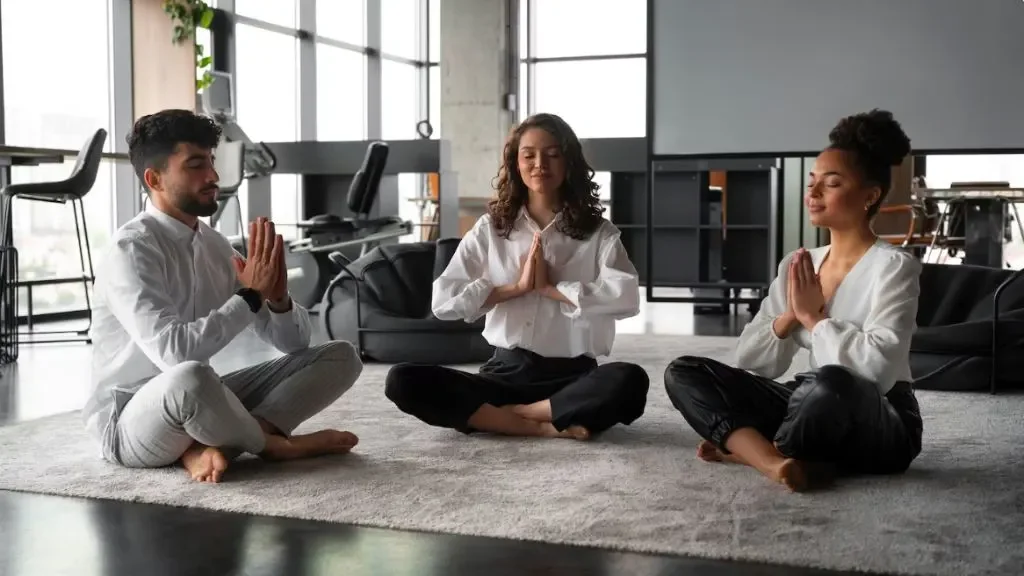
A shared meditation session frequently adjusts the overall office mood.
Voices soften. Conversations slow down. People make space for each other.
That environment spreads obviously, shaping how meetings run and the way feedback feels.
It’s one of the reasons greater HR departments now treat corporate meditation classes as a part of leadership development. Calm minds create calm environments, and peaceful environments lead to stronger collaboration.
The Human Side of Productivity
No spreadsheet can measure peace of mind, but every person feels its presence.
A place of work that values emotional stability produces more than simply consequences—it produces belonging.
Meditation helps teams to see past roles and titles.
When coworkers breathe together, walls among departments seem to fade. People remember that they’re human first, employees second.
This connection builds agreement faster than any motivational speech ever may want to. Over time, it turns into the invisible glue holding the team together.

The Lifestyle Coach Approach
A lifestyle coach brings something special to this system—steering that feels non-public and grounded.
Rather than coaching abstract practice, a teacher connects meditation to everyday office life.
For instance:
How to take 3 conscious breaths before replying to a hard email.
How to reset among back-to-back Zoom meetings.
How to create a morning ritual that improves focus earlier than the day starts has evolved.
These are small modifications, but they ripple outward. With constant guidance, meditation will become more than a consultation—it will become a dependency.
A lifestyle coach also adapts practices to agency tradition. Tech groups prefer brief mindfulness breaks, while innovative departments may additionally experience longer guided meditations.
Customization continues the practice of making it relevant and engaging.
Visible Results Over Time
Companies that introduce corporate meditation classes often notice consequences within weeks.
Employees call in sick much less often. Communication improves. Projects run smoother.
The workspace honestly feels lighter.
Studies from major universities have shown that meditation lowers stress hormones, improves focus, and enhances emotional intelligence.
These benefits increase beyond productiveness. Employees sleep better, make clearer choices, and convey less intellectual clutter.
When human beings experience mental robustness, performance clearly follows.
Calmness will become a competitive advantage.

Simple Ways to Bring Meditation to Work
Starting small makes a distinction.
A 10-minute meditation earlier than crew meetings.
A short “mindful break” after lunch.
A weekly guided session led by a certified teacher.
Some companies additionally offer hybrid options—a mix of virtual and on-site sessions to reach every worker.
Consistency matters are greater than layout. What subjects are they that take place frequently enough to construct a rhythm?
Soon, those short moments of stillness start to define the workplace rhythm itself—slow enough to think, speedy enough to perform.
The Science Behind Calm
The human brain isn’t built for constant alerts and nonstop multitasking. Meditation resets that overload.
It lowers cortisol, the pressure hormone responsible for anxiety and fatigue. It additionally activates the parasympathetic nervous system—the body’s natural relaxation mode.
With regular practice, meditation changes how the body reacts to pressure altogether.
Instead of anxiety, the response becomes awareness.
Instead of panic, calm clarity.
The physiological shift is real, measurable, and visible in behavior.
Teams who meditate handle stress better, recover faster, and stay prompted longer.
Creating a Culture That Lasts
Every employer needs a strong culture; however, that culture isn’t built through slogans. It grows from shared experience.
Corporate meditation classes provide a shared experience of calm, empathy, and recognition.
They remind everybody that productiveness without peace is short-lived.
Companies that invest in mindfulness aren’t just improving workflow; they’re redefining what achievement looks like.
And it indicates. Employees smile more, leaders concentrate more, and stress does not dominate the day.
In a snug environment, creativity thrives.
The Future of Work Is Mindful
As greater businesses encompass hybrid work and flexible hours, high-end fitness will thrive at the center of achievement.
The subsequent wave of control will depend not only on innovation but also on emotional intelligence.
Meditation builds both
With guidance from a skilled lifestyle instructor, meditation becomes a part of the day-by-day rhythm, no longer a challenge but a way of operating.
Calm mindfulness replaces chaos, and stability replaces burnout.
That’s how true culture change starts, quietly, one breath at a time.
Conclusion
Workplaces don’t transform through pressure; they transform through presence.
Corporate meditation classes provide that presence, a second of stillness that clears the mind, heals the body, and reconnects the team.
When calm turns into part of company culture, focus, creativity, and cooperation naturally follow.
Because whilst people feel centered, work no longer looks like a race, it feels like a shared purpose.